WASP AERODYNAMICS LAB / RESEARCH
Low Friction Training: The Method of Training more while feeling one is doing less.
TECHNICAL INFOGRAPHIC · WASP AERO-X LAB
ABSTRACT
The most common injury for running athletes is an overload of the lower extremities.. High mileage and intensity as well as unsufficient recovery belong to the main causes. Therefore, these three factors need to be balanced precisely to maximize training volume in a sustainable manner. The low friction approach enables an easy-to-grasp habit to achieve this desired outcome. By intelligently distributing workouts over the day with regard to mileage, intensity and feeling percieved and actual training strain has been reduced while the overall load has been increased from 100 km/week to 130 km/week and from 13 km to 16 km in the daily time frame.
Anectdotal Evidence
I went from struggling to run 100 km/week (including two workouts) to running 130 km/week (including five workouts) with less effort. How, you might wonder? All to the power of Low Friction Training.
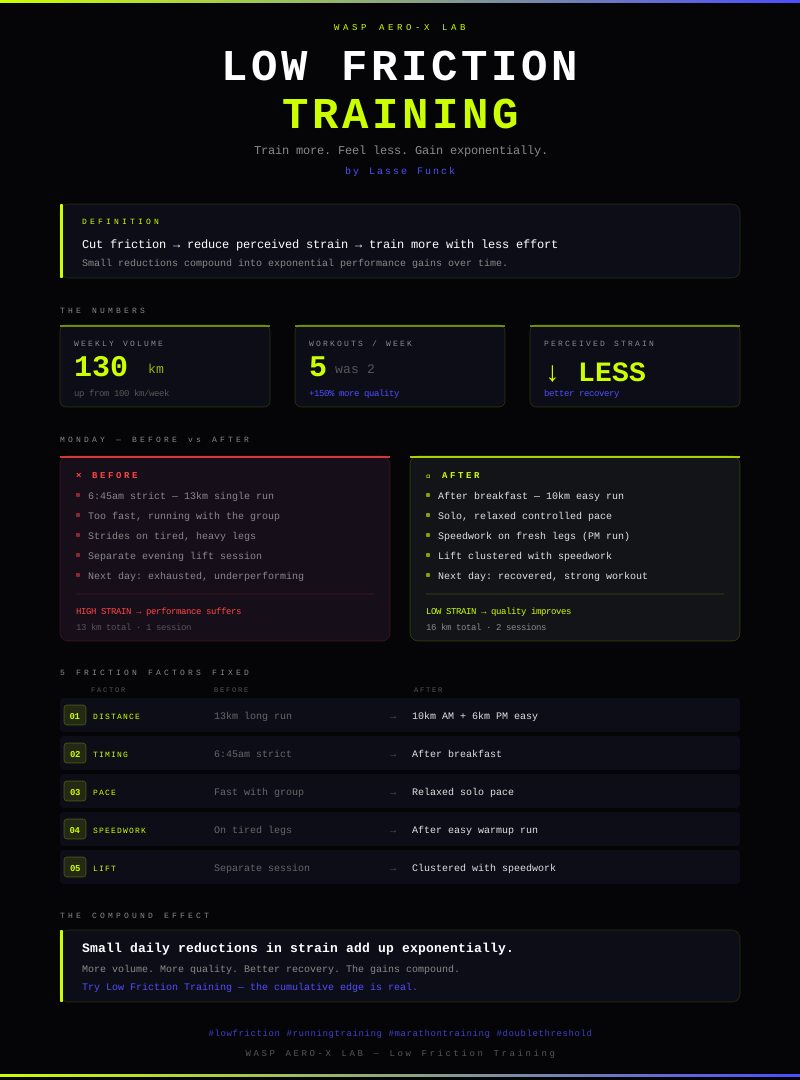
The concept is as simple as effective. You cut out as much friction as possible, reducing the overall perceived training strain. To explain it very simply I will give a concrete example. Last year, I would run 13 km every Monday at 6:45 am. I did this run with other people (usually at too fast pace) with some strides afterwards with a lift in the evening. The day after I would feel slightly exhausted and my workout performance would suffer. The strain factors: too long of a distance, too early of a run, too fast of a pace, strides on too tired legs, and lifting at a separate time.
Now I run 10 km easy in the morning after breakfast and run another 6 km easy in the afternoon with speedwork and a lift afterwards. While at first it sounds like more, the strain is actually reduced. I fixed each of the strain factors. I replaced the long distance with two shorter distances I find to be extremely easy physically and mentally. I replaced the strict 6:45 schedule with a time that works based on my sleep schedule. I slowed the pace to the point I feel as relaxed as possible. I do speedwork after a short warmup run so my legs feel fresher due to lower muscle tone. I also cluster the lift with the speedwork due to similarity in energy systems to get the most out of the day. Overall, I did more mileage at a better effort, did more speed at a higher quality and recovered better all adding to a lower training strain then the previous run and lift schedule.
Being a citizen scientist I have tried many training concepts to maximize my performance. But this recent idea stuck the most with me and people around me. I encourage you to try implementing Low Friction Training as much as possible. The example shows an increase in volume, quality, and recovery. Over a long period of time the small benefits add up exponentially allowing for more performance gains at a lower training strain.
PUBLISHED
2 April 2026
AUTHORS
Lasse Thilo Albert Funck · Author – Workout Specialist
Jan-David Ridder · Abstract, Correction & Implementation